
Is it safe to store a car battery in the house?
By Paul Smith, owner of Concept Car StorageStorage tips
Yes, a car battery can be stored safely in the house, and a dry room indoors is one of the best places for it. Varta's advice on storing vehicle batteries calls a dry room in the house the optimal solution, with the battery standing upright in a ventilated spot where it can be charged, fully charged to between 12.7 and 12.8 volts before it goes into storage, and checked every two months.
The care is needed mainly when the battery is being charged and handled. The HSE's guidance on using batteries safely explains that a vented battery lets the hydrogen and oxygen produced while it charges escape into the air, and that the acid inside is corrosive enough to burn skin and damage eyes. Keep flames and sparks away from a battery that's charging, charge it somewhere well ventilated, keep metal away from the terminals, and keep it out of reach of children and pets.
Why take the battery out at all
A car that stands for months loses battery charge in two ways. The car's own electronics keep drawing a little current, and the battery discharges slowly even with nothing connected. Taking the battery out stops the first, and bringing it indoors makes the second easy to manage, because it can sit on a charger in the warm rather than in a cold garage.
That's the route some owners choose for the winter, especially with an older car that has little in the way of electronics to keep powered. It's what our Storage Type A package is for, at £25 a week, where the owner disconnects or removes the battery before the car comes in. Whether to disconnect a car battery for storage comes down to the car, and for most modern cars a conditioner on the battery while it stays in the car is the better choice.
Taking it out safely
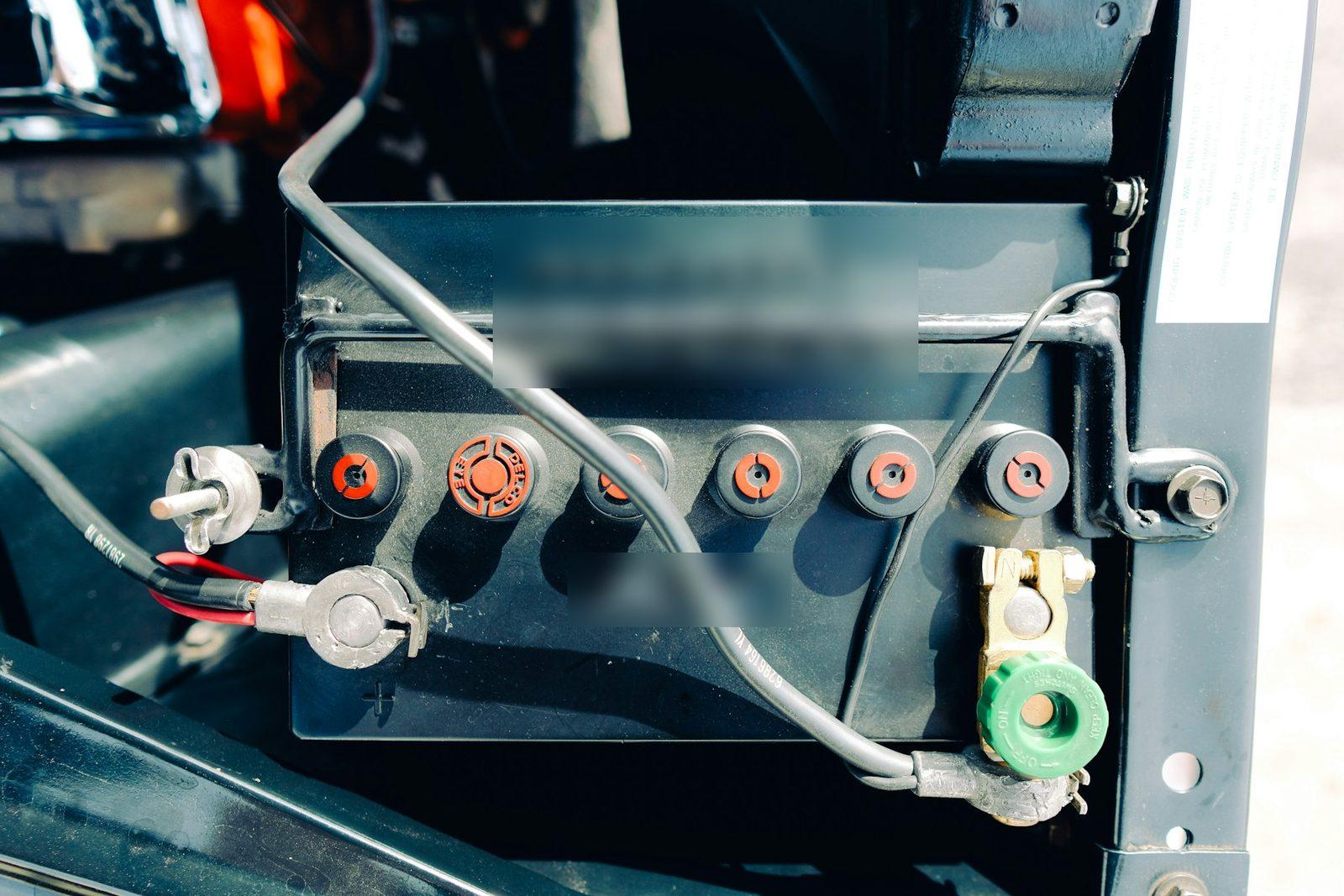
The RAC's advice is to remove the negative terminal first and, when the battery goes back in, to reconnect the positive terminal first. A car battery is heavy, so lift it with care and keep it upright, and wear gloves and eye protection, as the HSE advises for anyone handling batteries. Before you take it out, find the radio code and anything else the handbook says you'll need to reset once the battery goes back in.
Empty your pockets before you start. The HSE warns that a spanner or any other metal object that bridges the two terminals can short-circuit the battery, heat up very quickly and even explode. Fitting temporary plastic covers over the terminals, as the HSE suggests, keeps that from happening once the battery is out.
Where to keep it in the house
Varta's guidance points to three things. Keep the battery somewhere dry, because moisture can cause small leakage currents that drain it. Keep it cool and at a steady temperature, ideally averaging around 15°C, and away from heaters and other sources of heat, which speed up corrosion and sulphation. And stand it upright, in a ventilated place that has a socket for charging. A dry utility room or a dry cellar suits most homes.
Keep it where nobody will knock it over or touch it by accident. The HSE points out that the acid in a battery can cause serious chemical burns and is poisonous if swallowed, so a high shelf in a room children and pets don't use is a better spot than the floor of a hallway.
Keeping it charged through the winter
A battery that sits part-charged for weeks at a time loses capacity for good. Varta's advice is to charge it fully before it goes into storage, to check the voltage every two months, and to recharge it to 100% with a charger that has a maintenance mode if it drops to 12.5 volts or below. A smart charger or conditioner that tops the battery up only when it needs it can stay connected for the whole winter.
Check that the charger suits the battery. Some cars use AGM or lithium batteries, which may need a charger made for that type, and the handbook or the label on the battery will say which you have.
Charging it safely indoors
Most of the risk sits here. The HSE's guidance for anyone charging batteries is to charge them in a well-ventilated area and to keep sources of ignition, such as flames, sparks, electrical equipment, hot objects and mobile phones, well away from a battery that's being charged or has just been charged. A sealed, maintenance-free battery recombines the gases it produces while charging, while a vented one lets them escape, so the type you have makes a difference to how careful you need to be.
In practice that means a room with air moving through it, not a cupboard, nothing flammable around the battery, and the charger plugged in and switched on only once its clamps are on the right terminals. If the battery is a vented type that can be topped up, check its level before charging, and wear eye protection if you do.
Putting it back in the spring
Give the battery a full charge before it goes back in, rather than relying on it to start the car straight from storage. Reconnect the positive terminal first, as the RAC advises, then the negative, and make sure both clamps are tight. Expect to reset the clock and the radio presets, and on some cars the electric windows too.
Before you start the car, run through the other checks for a car that's been laid up. How long a car can sit without being driven is mostly a question of whether the battery, tyres, brakes and fuel have been looked after while it stood, and the AA's checklist of tyre pressures and fluid levels before the first start is worth following.
Or leave it in the car on a conditioner
If carrying a battery in and out of the house sounds like more trouble than it's worth, there's another way. On our Storage Type B package, at £30 a week, the car stays connected to its owner's own battery conditioner for as long as it's with us, so the battery never leaves the car and stays charged all winter. Type C, at £35 a week, adds an engine run once a month, all the way up to temperature, and a private road on site means engines can be run without a car going onto a public road. How often a stored car should be started matters less than whether each run goes all the way up to temperature.
Every package keeps the car indoors in a dry building with an alarm set around the clock, under a luxury cotton cover, with its tyres rolled regularly, and the facility is manned seven days a week. The full details are on our pricing page, and every package has a minimum term of three months.
Book a space for the winter
If you're laying a car up this winter and want the battery looked after, or you'd rather take it home yourself, get in touch to book a space and tell us which suits you. We store modern and classic cars of every kind just off the A21, 10 miles from Tunbridge Wells.
This article is about our what we store service. Find out more about what we store.
Ask us a question
Want to check there's space, or which package suits your car? Send us a quick message and we'll get back to you, or message us on WhatsApp.