

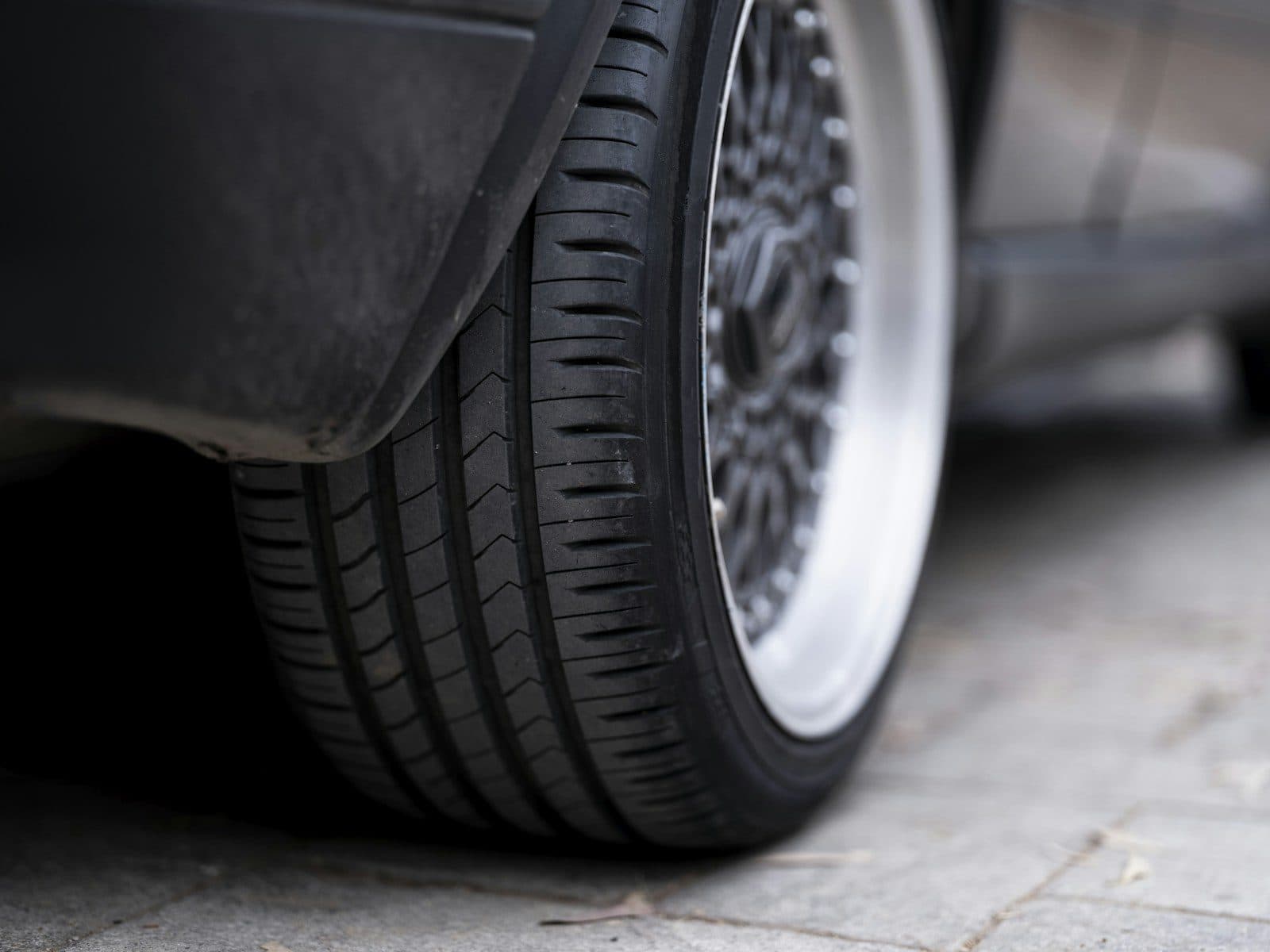
How to prevent flat spots on tyres when storing a car
By Paul SmithStorage tips
To prevent flat spots on tyres while a car is stored, stop the same patch of each tyre carrying the car's weight for weeks on end. Roll the car or turn the wheels regularly so a different part of the tread takes the load, keep the pressures where they should be and check them every month, and for a very long lay-up consider taking the weight off the tyres altogether. Keep the car somewhere cool, dry and out of direct sunlight, and check the pressures again before it's driven.
The reason is time under load. Continental's advice on flat-spotting explains that a car left for a few days or weeks may vibrate slightly for the first few miles, until the tyres warm up and regain their shape. Leave it standing under load for a month or longer, as happens over a winter lay-up, and the flat spots can become semi-permanent, the kind normal driving won't remedy. At our facility the tyres of every car in our care are rolled regularly, whichever package the owner chooses, so the weight never sits on one section of rubber all winter.
How a flat spot forms
When a car is parked, the part of each tyre touching the ground flattens slightly as the tyre cools. Drive off and it rounds out again within a few miles. The longer the car stands, the more the rubber and the structure inside the tyre take on that flattened shape. Continental lists the things that make it worse. Big swings in temperature, a car parked overnight in the cold, long periods in storage, and tyres that are underinflated or overloaded all add to it. How badly a tyre flat-spots depends on its size, the load on it, its internal construction, the temperature and how long it stands.
A temporary flat spot shows up as a slight vibration through the steering wheel or the seat when the car first moves, and it fades once the tyres reach their normal working temperature. A semi-permanent one doesn't fade after a few miles of driving, and it needs a tyre specialist to look at it.
Move the weight regularly
The surest prevention is to change which part of the tyre carries the load. Michelin's technical manager, giving advice for laid-up cars and vans, recommended turning the tyres a quarter turn every four months if a vehicle hasn't been moved, and making sure it isn't parked on stones or anything else that could dig into the tread. Moving a stored car more often than that does no harm, and it fits with Continental's point that a month or more on the same patch is what turns a temporary flat spot into a lasting one.
In our experience, rolling the tyres regularly works better than relying on higher pressures alone, because extra pressure only reduces how far the tyre flattens, while moving the car changes which part of the tyre carries the weight.
At home, a quarter turn of the wheels means rolling the car about half a metre on a typical family car's tyres. Do it on a level floor with someone to help, chock the wheels again afterwards, and mark one tyre with chalk so you can see it has moved round. If you run the engine to move the car, open the garage doors fully first, because exhaust gas contains carbon monoxide, which you can't see or smell.
Get the pressures right, and keep them right
Advice on pressures for storage differs between sources. Continental recommends adding 3 psi before a car is parked for a long period, and says never to go above the maximum cold inflation pressure for the tyre. Hagerty UK's winter storage tips go further and suggest pumping the tyres up to the maximum recommended pressure. Michelin's lay-up advice is to set the pressures at the normal level for the vehicle, then check and correct them every month.
All three agree on two things. Never let a stored car's tyres run low, because underinflation is one of the conditions that makes flat-spotting worse, and never exceed the maximum pressure moulded on the tyre's sidewall. Tyres lose air gradually, so pressures that were right in October may not be right in January unless someone checks them. If you do raise the pressures for storage, write down the figures you normally run, from the handbook or the label on the door pillar or fuel flap, and leave a note on the steering wheel so nobody drives off on storage pressures.
Taking the weight off completely
For a long lay-up, some owners take the weight off the tyres entirely. The AA's laying-up advice for a classic car is to lift it onto blocks or stands so the wheels are clear of the ground, which takes the stress off the tyres, and Hagerty points out that axle stands take the load off the wheel bearings as well.
It isn't a job to improvise. Use proper axle stands rated for the car's weight, on a solid level floor, at the support points the handbook shows, and never leave a car resting on a jack. A car on stands can't be moved in a hurry, and with its wheels hanging the suspension sits at full stretch, so check the handbook or ask a specialist for your model first. For a winter lay-up, correct pressures and regular turning are what Michelin's advice relies on, and for most cars they're enough.
Where the car stands matters as well
Rubber ages faster in heat, sunlight and ozone. Continental's guidance on storing tyres describes ozone as particularly damaging to tyres and points out that electric motors with contact brushes produce it, so a car shouldn't stand right beside that kind of equipment. It also says to keep tyres out of direct sunlight, somewhere cool, dry and moderately ventilated. Michelin adds that tyres shouldn't sit for long periods in a pool of water or oil, and that covering them against sunlight helps them last.
A dry indoor building takes care of most of that, which is one reason a car laid up for the winter is better off inside than on a drive.
Check the age of the tyres too
A car that only comes out in the summer does few miles, so its tyres can age out long before the tread wears down. Michelin's advice on how long tyres last is to have tyres checked by a professional at least once a year after five years of use, and to replace them as a precaution if they haven't been replaced ten years after their date of manufacture, even when they look usable.
The date is on the sidewall, in the last four digits of the tyre's identification number. The first two give the week and the last two the year, so 2219 means the 22nd week of 2019. A winter in storage is a good time to look. Check the dates, look along the sidewalls for small cracks, and talk to a tyre specialist if anything is close to the limit, so new tyres can go on before the spring rather than holding up the first drive of the year.
When the car comes out of storage
Before the car is driven, set the pressures back to the figures in its handbook while the tyres are cold, and look them over for damage. Michelin's lay-up advice is that any tyre that has stood for a long period should be inspected before it goes back into service. Expect a slight vibration for the first few miles, which should settle as the tyres warm up. If it doesn't, or the steering feels wrong, Continental's advice is to see a tyre specialist or garage.
The tyres sit alongside the other jobs in preparing a car for winter storage, from the battery to the paperwork. If the car is laid up with a SORN and you plan an MOT before the spring, the tyres are one of the things the test checks, so replace any tyre that's past its best first.
Tyres at our facility
Every car we store is kept indoors in a dry, alarmed building that is manned seven days a week, under a cotton cover, with its tyres rolled regularly. That's part of all three packages, from Storage Type A at £30 a week to Type C at £40 a week, and the pricing page shows what each one adds for the battery and the engine. On Type C the engine is started once a month and run up to temperature, and how often a stored car should be started depends as much on how long it runs as on how often. Every package has a minimum term of three months.
When you want the car back, give us 24 hours' notice through the check-out form, by phone or on WhatsApp. If you can't bring the car over or collect it yourself, we can collect it and deliver it back.
Book a space for the winter
If you're laying a car up this winter and want its tyres looked after while it stands, get in touch to book a space. We look after modern and classic cars alike at our facility just off the A21, 10 miles from Tunbridge Wells, and you're welcome to arrange a visit before you decide.
This article is about our what we store service. Find out more about what we store.